















In a time when academic demands and social pressures can weigh heavily on students — both in and out of the classroom — sometimes, a little extra help can go a long way.
“Talking sometimes,” said Ted Rosenthal, a longtime mentor in the Nassau County Bar Association’s student-mentorship program, “is just helpful.”
On Long Island, educational pressures are coupled by an inequitable system, but mentorship programs of all shapes and sizes exist, seeking to counteract some of the challenges students are often bound to face. The bar association, a professional, nonprofit organization of attorneys, judges and professionals in the legal field, engages with local school communities by partnering lawyers with middle school students. More expansive, regional initiatives by advocacy groups offer students from all walks of life ways to navigate challenges and discover opportunities beyond the classroom.
There’s no perfect way to educate every child. Long Island’s learning environment — due in part to systemic inequities — is set up to help some students succeed while others are left behind, according to Elaine Gross, the founder and director of ERASE Racism. But aggressive approaches that ensure all students have the opportunity to learn about themselves and the world around them can help set students up for success.
And success is hard to track once students become adults.
But there are programs, such as those developed by ERASE Racism, a regional organization based in Syosset that leads policy advocacy campaigns and related initiatives to promote equity in areas like public education, not only educate Long Island’s youth, but inspire them to grow with each other. Gross said many of its program’s “graduates” are often influenced to work with younger generations.
“I know we’re doing something right,” she said.
Some programs break barriers and encourage local, student-driven leadership
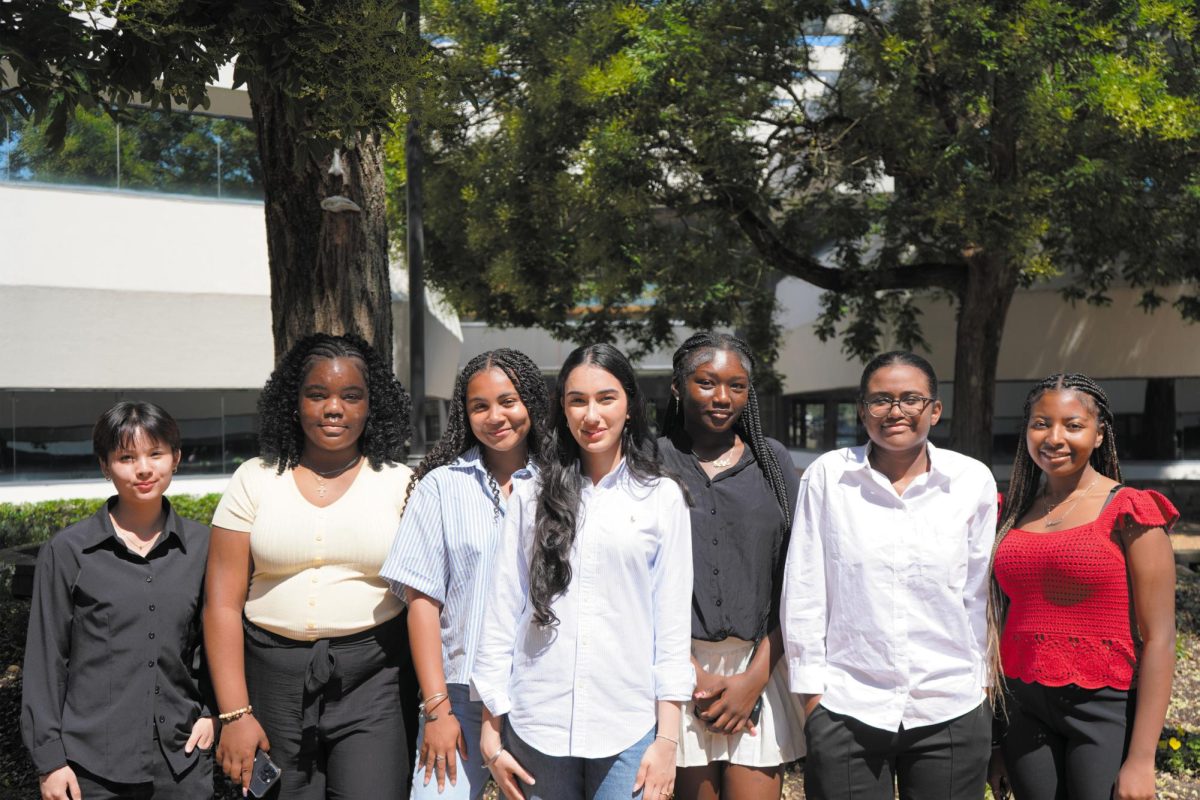
ERASE Racism has a variety of youth development and leadership programs for high school students, who are passionate about creating change in their schools and communities.
“Our programs,” Gross said, “one of the things that they do is they give students, of all racial and economic backgrounds, the opportunities to learn in integrated learning environments.”
The organization as a whole focuses its advocacy efforts in many areas of education policy, incorporating the efforts of high school students. Among the programs it offers includes two conferences in the spring that welcome students from Nassau and Suffolk county school districts.
“We have students of all racial backgrounds, ethnic backgrounds, religions, income levels, in the same room, being learned and taught and having discussions,” Gross said. “It is really exciting, and we get great reviews every year.”
Other opportunities include its Student Task Force, a group of volunteer high school students that are passionate about having conservations while learning from others. The task force is accessible to any student on Long Island who wants to join, Nicole Grennan, ERASE Racism’s community educator and organizer explained. They typically have about 20 to 30 extremely active students every year. Applications are available at ERASE Racism’s website.
Students in the Task Force end up leading the group’s spring conferences, which have the widest and quickest reach, Grennan added, often encouraging others to get involved in programming.
Some students take things a step further, applying for its Student Leadership for Equity Internship, an intense 6-week summer program that encourages students to engage in research projects and implement direct change in their school communities, focusing on equitable curricula, education policies and student activism.
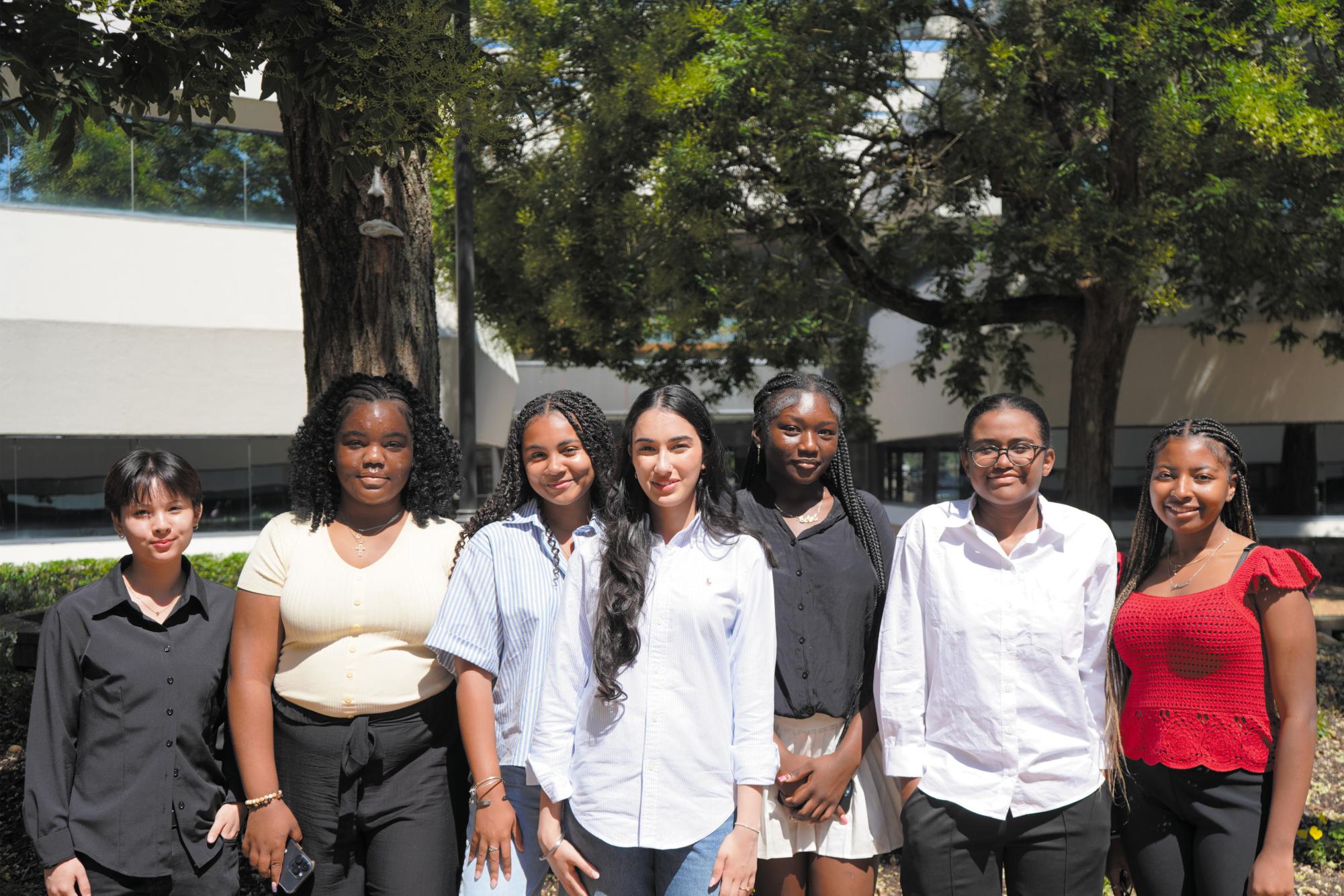
The internship program is about 5 years old, according to Grennan, who has overseen the program the last two summers. Its structure has changed slightly, depending on who is overseeing it, she explained, but it always ensures that students learn about structural racism and how it impacts them locally, regionally and nationally.
The research projects students engage in are powerful, Grennan explained, and can have tangible effects in their local communities, should a student have the resources and ability to implement what they’ve learned. She pointed to a project by Matthew DaCosta, who is now a senior at Malverne High School in Nassau County. He spent the summer before his junior year designing a program for elementary school students to learn about racism in an age appropriate way. It launched in the district last year.
“He’s still running it,” she said. “I caught up with him about two weeks ago, and he let me know that this year, he’s also touching on things like how to start a business.”
Because of projects like DaCosta’s, often there’s a ripple effect that touches even the youngest of residents in Nassau and Suffolk county schools.
“It’s (about) coming up with a project, taking it back to their school and putting their own spins and creativity on it,” she said, “which is why I never want to limit them, because you never know how it’s going to turn out when you give them free rein.”
Grennan has contacts within all 125 districts on Long Island, who she reaches out to when applications open for the internship, which is paid. From there, students can learn how to apply through their school’s internship coordinator. For the summer of 2025, ERASE Racism had 61 applicants for eight spots.
While the internship is meaningful as it lets students tap into their interests and plan projects that can impact their communities, it also doubles as workforce development.
“It’s a combo of an educational program and a professional development program where they’re getting real life work skills,” Grennan said. “They have to come to the office. They have to be on time every week. They have to send me a progress update. And, they also get to explore a research project of their choosing.”
Nassau County Bar Association mentors through conversation
The Nassau County Bar Association takes a more individualized approach to mentorship. Attorneys, acting as mentors, meet with middle-school aged students bi-monthly, offering not only friendship, but advice that helps them find success academically and socially.
The program’s founder, Alan Hodish, is a lawyer and a former teacher in the Hempstead School District. After he left teaching to pursue a career in law, he founded the mentorship program in the same school he used to work at. The program, now in its 29th year, has embedded mentors into multiple Nassau County school districts, including East Meadow, where Hodish resides.
Often, the students selected to participate are identified by their school’s guidance counselors or social workers because they have difficulties with their academics, social skills with peers or disruptions at home, Joshua Brookstein, a lawyer and program mentor explained in a blog post shared by the Uniondale-based firm, Sahn Ward.
In East Meadow, the program first came to Woodland Middle School about two decades ago, after former school board members saw the program’s success in other Nassau County districts. It is also run in W.T. Clarke, East Meadow’s other middle school. Today, about 12 to 15 students take part in the program annually at each school.
Twice a month, mentors sit down with their mentees, typically during early-morning sessions at their school’s cafeteria, offering everything from casual conversation to helpful advice. The program promotes a safe space for participants — a judgment-free environment — where they can discuss whatever they feel comfortable talking about.
Rosenthal, an attorney and mentor at Woodland for about 15 years, said while the lawyers are aware the students in the program were chosen to partake for reasons, those reasons are rarely, if ever, part of the conversations they have with them.
“Our purpose is not to find out what the problems are,” Rosenthal said. “The purpose is to give them someone to connect with.”
Over the years, Rosenthal said some students have been easier to talk to than others, which is expected. Often, he added, mentors will try to gauge their student’s interest, and meet them where they are at. Students don’t ever get more or less comfortable talking, Rosenthal said, so he tries to learn their personalities and find common ground.
An example Rosenthal pointed to was a former mentee of his that wasn’t overly talkative, but loved art. In particular, the student was fascinated by Asian-inspired pieces, and learning Chinese, Japanese and other forms of lettering.
“He didn’t really communicate, except he was very into learning Japanese and Chinese script,” he said. “So, that’s what we did. There was very little talking, but he would show me different symbols — not something I knew anything about. That was his thing.”
He added that it’s not a mentor’s job to pry, but rather make them feel comfortable. Mentors, he explained, just strive to make students feel seen and heard, however that may be.
“It’s for me to make them feel like they can talk,” Rosenthal said. “And if that’s what he wants to talk about, or she wants to talk about, might as well, right?”
It can be hard to tell if you’re making a difference, Rosenthal added, but he’s had instances where he’s learned that his mentorship has influenced students positively.
One year, for example, Rosenthal was aware that a student he mentored had recently lost their father.
“After the year was over, the mother reached out to me, thanking me for how helpful I was during that period,” he said. “And though I knew the father had passed away, the student never mentioned it, nor did they have to. But there was an effect.”
More recently, Rosenthal recalled running into a former mentee of his in a shopping center in East Meadow. The student, who was about 21-years-old, immediately recognized him, and was eager to update Rosenthal on his life.
“They said, ‘You were my mentor, seven, eight years ago. I’d like to tell you what I’m up to,’” Rosenthal recounted. “He told me what was transpiring over the last couple of years for him, in a very positive way. He had hit some bumps in the road during that time period, and felt the need to share with me.”
The conversation was largely reminiscent of their days in Woodland’s cafeteria. Rosenthal related the feeling of being recognized to that of a teacher who was noticed by a former student in public.
“It made me feel wonderful,” Rosenthal said. “I felt I had a connection.”
So, who gets left behind?
In 2023, ERASE Racism released its most comprehensive report to date outlining the inequities within Long Island’s education system. Between the years of 2007 and 2022, the average size of racially diverse or predominantly white school districts decreased, while the “size of intensely segregated schools” — those comprised of at least 90% students of color — grew by 34%. Fifteen years ago, intensely segregated districts were only 12% larger than other districts. As of 2023, they are 80% larger.
The number of students attending diverse or predominantly white school districts is decreasing, according ERASE Racism’s latest report, while the number of students attending ‘intensely segregated school districts’ is increasing. Created by Jordan Vallone using Datawrapper.
The number of students with “greater needs,” such as those who are multilingual learners or come from an economically disadvantaged background, are being concentrated into intensely segregated areas. There are systemic funding inequities, Gross explained, and while some changes are being implemented to address these issues, the opportunity gap — directly tied to state aid districts are entitled to — continues to increase, year after year.
Under previous policies, school districts in New York state were entitled to the same amount of aid they received the year prior. Gross said while this works in some areas, it often means that districts with greater needs are being left behind, or at the very least, not receiving adequate funding.
A newer formula is in place, Gross said, following a report by the Rockefeller Institute of Government, a nonpartisan public policy think tank. The institute assessed New York’s Foundation Aid formula for public education and while its suggestions have led to better policies, Gross said, it’s still not enough.
Students who take part in ERASE Racism’s programs, Gross said, often learn a lot about their communities and systemic racism on Long Island.
“The subject matter is interesting,” she said. “Students are learning the history of Long Island, and they tell us that many of the things they’re learning, they don’t learn about either from their parents or from school. It’s the first time they’re being exposed to the whole idea of how Long Island was developed — redlining — the notion that our government intentionally supported housing that was segregated.”
ERASE Racism’s programs help, Gross explained, because they reach diverse groups, making sure all students feel heard and seen, more matter their background.
“We’re working in this inequitable system,” Gross said. “We always talk about structural racism. As a result of these structures that remain unchanged, the outcomes are so different, and it’s not fair. What we get to see is that there are smart kids all over this island — students who are enthusiastic, students who are engaged.”
Impact that extends beyond students
Mentors and program leaders, especially those in the Nassau County Bar Association, benefit from their work with students, although perhaps in different ways than local youth.
At Woodland in particular, Hodish credits the program’s growth and success over the years due to the support of regular volunteers — the mentors like Rosenthal who come back, year after year — establishing longevity.
The program thrives on recognition, he added, with the hope that more districts take an interest in it and involve their students as well.
“We’re fortunate here at Woodland,” Hodish said, “because we have a lot of attorneys that we’ve always had.”
“I feel I am very blessed, and I feel I have an obligation to give back,” Rosenthal said. “Being able to give back in this way, where I might actually be affecting a person’s life for the positive, there’s nothing better.”
Realizing how much students benefit from non-judgmental conversations, Rosenthal has carried the art of mentorship into his own life with a family member of his who has dealt with some struggles. He meets with him several times a year for lunch, and frequently checks in with him to see how he’s doing.
“He just knew someone was out there that he could talk to, even if he didn’t reach out,” Rosenthal said. “That’s what I hope for these students, that that’s how they feel.”
Jordan Vallone is a reporter with Stony Brook University’s School of Communication and Journalism’s Working Newsroom program for students and local media.